Topological Quantum Computing
 By starline on Freepik
Topological Quantum Computing (TQC) is an implementation of a quantum computer in a way that radically reduces decoherence. In TQC, we encode qubits in the topology of the used material. Specifically, qubits are encoded in the statistical evolution of two dimensional quasi-particles called Anyons. Topological quantum gates are applied on them by interchanging these Anyons.
Our research is focused on the simulation of TQC, and the construction of topological qubits models, as well as compiling topological quantum gates and algorithms.
Dr. Taha Rouabah started working on TQC in 2018 within the Laboratoire de Physique Mathématique et Subatomique at the University of Constantine 1, with Pr. Achour Benslama. Abdellah Tounsi and Nacer Belaloui joined the team as Master’s students in 2019.
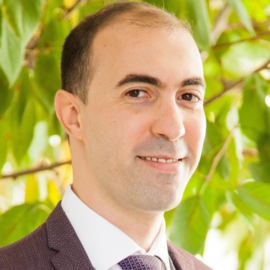
Mohamed Taha Rouabah
Associate Professor of Physics
ARISE Fellow, Principal Investigator at Constantine Quantum Technologies, Associate Professor at University of Constantine 1 (Algeria).
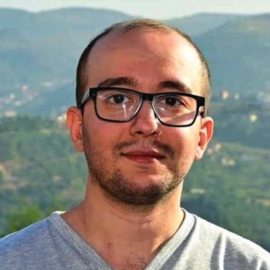
Nacer Eddine Belaloui
Ph.D student in Theoretical Physics
PhD student in Theoretical Physics. Working at CQTech on Variational Quantum Algorithms.
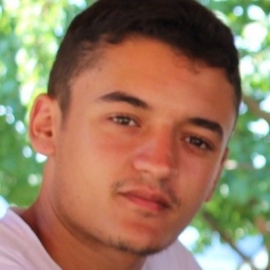
Abdellah Tounsi
Ph.D in Theoretical Physics
PhD in mathematical physics. Working on topological quantum computing.
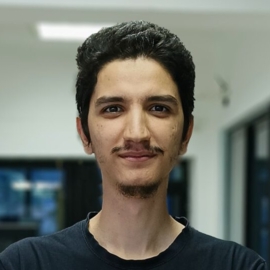
Mohamed Messaoud Louamri
Ph.D in Theoretical Physics
Theoretical physicist. I worked on variational quantum algorithms, quantum random number generation, and QUBO-based optimization. Currently, focusing on quantum Machine Learning and Quantum Optimization.